Osmometer Measurement Methods
FreezePoint® vs. Vapro®
The two most commonly used osmometers for this purpose are the Freezing Point Osmometer and the Vapor Pressure Osmometer. Although both measure osmolality, their readings can differ for the same sample, including for the same reference standard.
Note: The Vapro osmometer uses the SI unit "mmol/kg" for osmolality, while the FreezePoint osmometer uses the non-SI unit "mOsmol/kg." Both units are numerically identical in the context of osmolality but may differ in other contexts.
Vapor Pressure Measurement Method
Vapor Pressure Osmometry measures the dew point depression (e.g., decrease in the dew point temperature) of a solution using a thermocouple. The presence of dissolved particles predictably reduces the vapor pressure and hence the dew point temperature of the solvent. The dew point of the sample changes the temperature of the sensor and, according to the temperature, the voltage of the sensor changes (as it gains or loses water vapor depending on the relative humidity in the VPO solution cell).
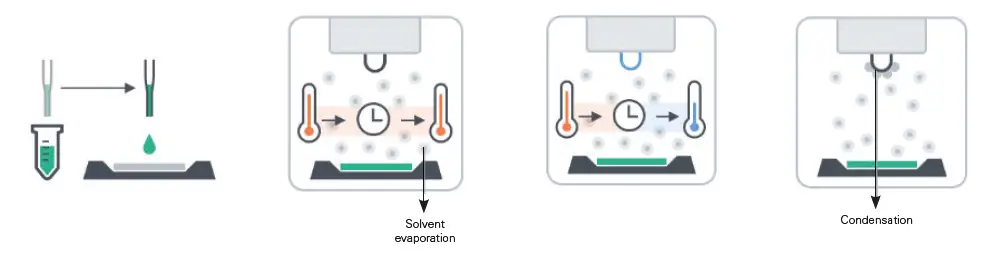
Suited for a variety of applications, except for solutions containing volatile solutes, as these can alter the vapor pressure and lead to inaccurate measurements.
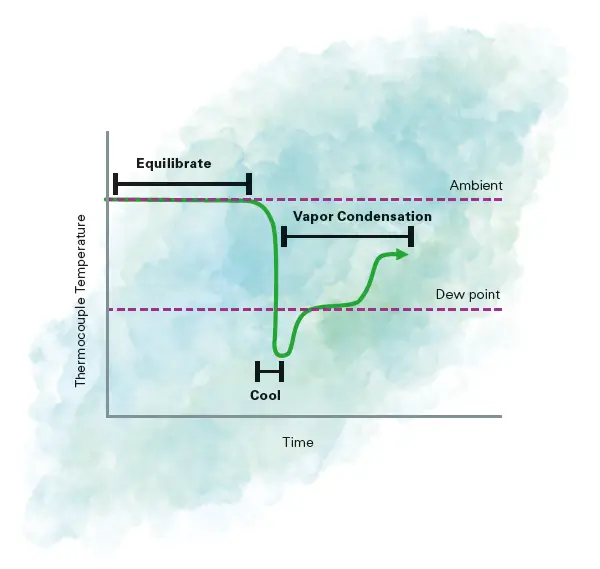
Vapor Pressure Principle:
- The sample solution is loaded onto a solute-free paper disk using a pipette and loaded into the measurement chamber which is then sealed.
- The temperature of the chamber and the solvent vapor inside are allowed to equilibrate.
- Thermo-electric cooling cools the thermocouple to below the dew point of the vapor.
- Solvent vapor condenses on the thermocouple. The latent heat of vaporization heats the thermocouple, and the temperature rises asymptotically towards the dew point temperature.
Freezing Point Measurement Method
During the measurement, the sample is first supercooled below its expected freezing point. The controlled injection of the ice crystal ensures a reproducible start to the freezing process. As crystallization occurs, the temperature rises until it reaches a stable plateau phase, which represents the actual freezing point of the sample. Since the presence of solute particles lowers the freezing point in a linear, predictable manner, the system can determine the osmolality with extreme accuracy. Our high-precision temperature sensor captures this point with a resolution of 0.001 °C, ensuring the highest level of diagnostic confidence.
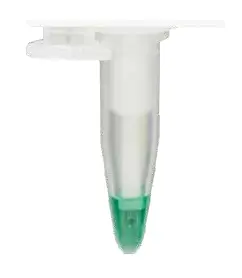
Preparation: Place the measuring vessel onto the highprecision thermistor probe.
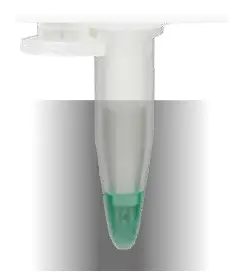
Controlled Cooling: The sample is lowered into the cooling chamber, where a microprocessor-controlled Peltier element coolsit to a sub-zero temperature.
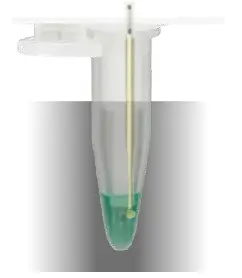
Initiation: Once the sample is supercooled, a cooled triggering needle (cryst-needle) initiates the freezing process by injecting an ice crystal.
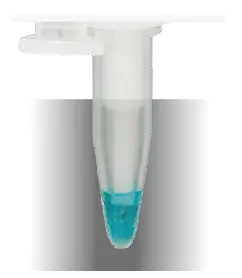
Crystallization: This triggered crystallization releases latent heat (thermal energy), causing the sample temperature to rise.
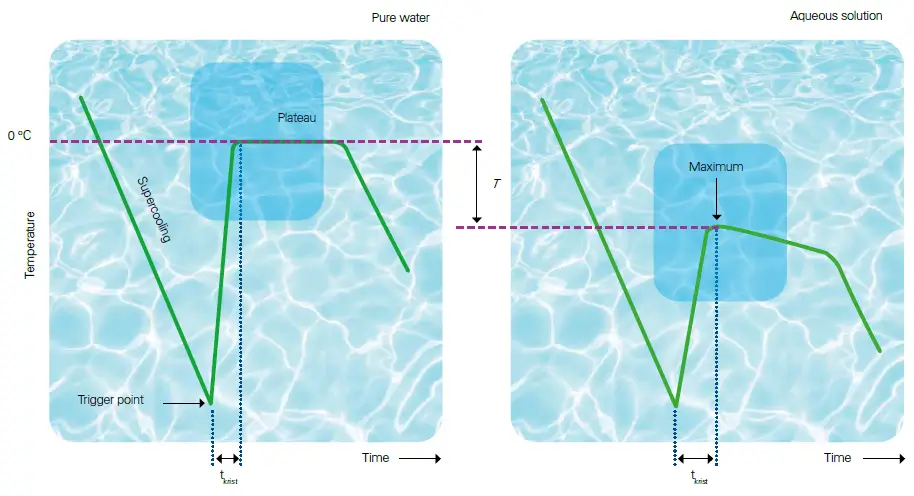
Freezing Point Principle:
- Super-cooling of the solution below freezing point. Due to the rapid cooling the sample does not freeze immediately.
- Crystallization is induced by injection of ice crystals and release of crystallization heat.
- During crystallization of the sample the heat of formation is released which increases the temperature of the solution until the freezing point is reached (plateau/maximum). The presence of solute particles predictably lowers the freezing point of the solvent.
- The plateau or slight slope of the temperature curve persists until complete crystallization, followed by a sharp drop inthe curve upon complete crystallization.